

Telescoping Gantry: Benefits and Safety Measures
Understanding the Telescoping Gantry
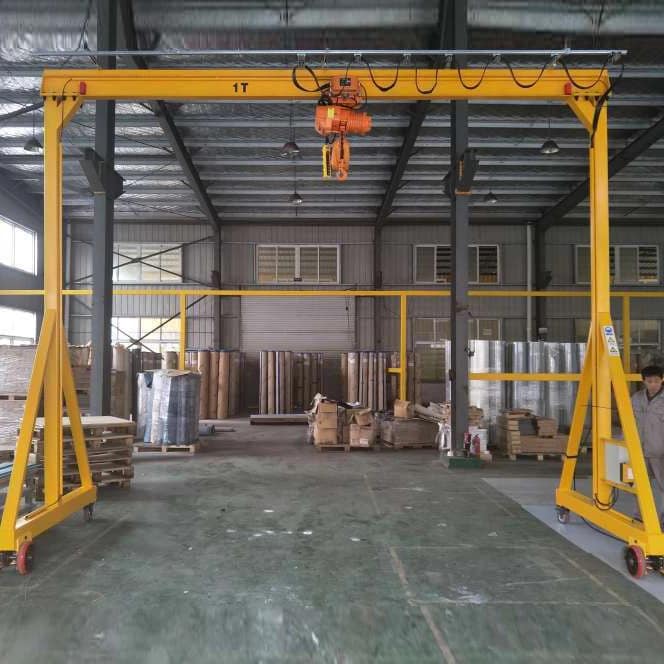
The telescoping gantry is a versatile form of gantry lifting equipment designed to accommodate varying load dimensions through adjustable beams or legs. Unlike fixed-span gantries, the telescoping gantry allows the operator to extend or retract the main beam, changing the clear span between the legs.
This adjustability is achieved through nested sections—typically rectangular or I-beam profiles—that slide within each other. Locking pins or bolts secure the sections at the desired length. Some telescoping gantry models also offer adjustable height by telescoping the vertical legs.
Mechanical Operation
To adjust a telescoping gantry, the operator removes the locking pins, extends the beam to the required length, and reinserts the pins into the matching holes. Precision‑drilled holes at regular intervals ensure consistent positioning. For height adjustment, similar mechanisms are used on the legs.
The materials used in a telescoping gantry are chosen to withstand the stresses of sliding contact. Steel is common for heavy‑duty units, while aluminum versions provide a lighter alternative for medium‑duty applications. The portable aluminum gantry may also incorporate telescoping features in some designs, blurring the line between the two categories.
Benefits of Using a Telescoping Gantry
The primary advantage of the telescoping gantry is its adaptability. In facilities that handle loads of different widths—such as crates, machinery, or structural beams—one telescoping gantry can replace several fixed‑span gantries. This reduces equipment costs and floor space usage.
Another benefit is the ability to fine‑tune the lifting point. By extending the beam, the hoist can be positioned directly above the load’s center of gravity, improving stability. This feature is especially valuable when working with irregularly shaped items that require precise alignment.
Space Efficiency
When not in use, the telescoping gantry can be retracted to a minimal footprint, making storage easier. This contrasts with the portable aluminum gantry, which often folds but may still occupy a similar floor area. The compact storage of a telescoping gantry is beneficial in congested workshops.
Safety Measures for Telescoping Gantry Operation
Operating a telescoping gantry requires strict adherence to safety practices. Because the beam consists of sliding sections, there is a risk of unexpected retraction if pins are not fully engaged. Always verify that each locking pin is inserted through both the inner and outer sections and that any secondary retainers (such as hairpin clips) are in place.
Load charts for telescoping gantry models often list reduced capacities at maximum extension. As the beam extends, leverage increases, which can reduce the safe working load. Operators must consult the manufacturer’s specifications and never exceed the rated capacity for the given span.
Comparing Telescoping Gantry and Portable Aluminum Gantry
While the telescoping gantry excels in adjustable span, the portable aluminum gantry leads in portability. Both are types of gantry lifting equipment, but their best applications differ. A telescoping gantry made of steel may weigh several hundred pounds, requiring a forklift or multiple people to move. In contrast, a portable aluminum gantry can often be moved by one or two workers.
For outdoor temporary lifting, the portable aluminum gantry resists weathering better than a steel telescoping gantry unless the latter is galvanized or painted. However, the telescoping gantry can handle heavier loads and larger spans, making it indispensable in heavy fabrication and construction.
Maintenance of Telescoping Gantry
Regular maintenance of the telescoping gantry focuses on the sliding interfaces. Apply a dry lubricant or light oil to prevent galling and ensure smooth adjustment. Inspect the locking holes for elongation or deformation, as worn holes can compromise pin engagement.
Check the condition of the casters and their attachment points. On a telescoping gantry, the legs may bear additional stress during beam adjustments. Look for signs of bending or cracking near the leg‑to‑beam connections.
Inspection Frequency
For gantry lifting equipment used daily, inspect the telescoping gantry weekly. Look for loose fasteners, damaged pins, and wear on the beam’s sliding surfaces. If the unit is used intermittently, perform a thorough inspection before each use.
Industry Applications of Telescoping Gantry
Shipyards and rail yards frequently employ the telescoping gantry to handle large components. The adjustable span allows the same gantry to service different vessel widths or rail car dimensions. Similarly, in steel service centers, a telescoping gantry can lift bundles of various lengths without requiring multiple cranes.
The telescoping gantry also appears in maintenance facilities for heavy trucks and buses. Mechanics appreciate the ability to spread the legs wide enough to clear the vehicle’s width while keeping the overall footprint manageable when retracted.
Need More Information On The Types Of Cranes? Contact MAITOR Today!
If you’re in need of an crane for your project but not sure which type or types of cranes will work best for your needs, we can help!
To learn more about our business and our equipment keep reading the helpful articles on our blog page.
To start a partnership with our team here at MAITOR, call us today toget a quote!