
Davit Lifting System Types and Structural Classifications
Overview of Davit Crane Categories
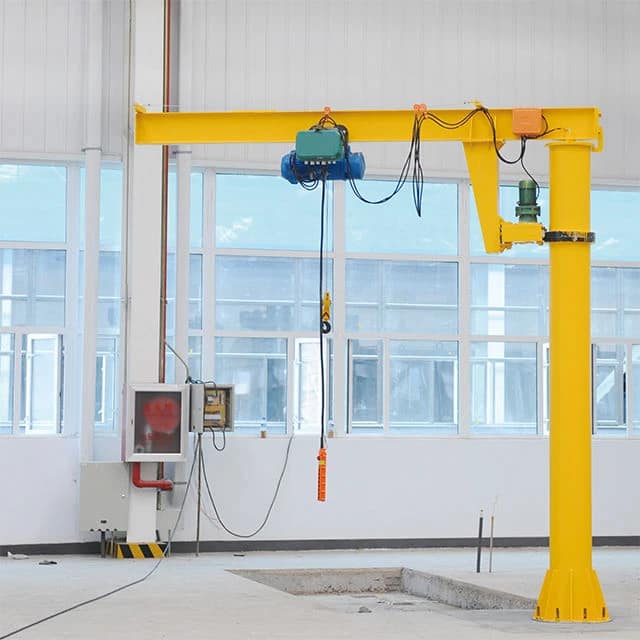
Davit cranes are essential material handling devices used in many industrial fields. Based on structural movement, davits and cranes can be divided into fixed column davits, slewing davits, and removable davits. The davit lifting system typically consists of a vertical or curved pillar that supports a rotating arm or hoist. In many years of field applications, engineers have optimized these designs to improve lifting efficiency and safety.
Fixed Column Davit Cranes
Fixed column davits are permanently installed on foundations or deck plates. They provide a stable davit lifting system for repetitive lifting tasks in one location. Davits and cranes of this type are common in shipyards and loading bays because they offer high rigidity and can handle heavier loads without tipping.
Characteristics of Fixed Davits
The main characteristic is the absence of rotation; the hoist moves only along the arm. However, some fixed davit lifting system models incorporate a manual or motorised slewing mechanism at the top. The choice depends on the required working radius. Experienced operators often prefer fixed davits when the lift points are consistent.
Slewing Davit Cranes
Slewing davits allow the arm to rotate, typically up to 360 degrees. This type of davit lifting system is widely used where loads must be transferred from a pick-up point to a landing area. Davits and cranes with slewing capability improve flexibility and reduce the need for multiple units.
Manual vs. Powered Slewing
Smaller davit lifting system units rely on manual rotation, while larger davits and cranes use electric or hydraulic drives. From an industry standpoint, manual slewing is adequate for occasional lifts, but powered slewing increases productivity in high‑frequency operations. Maintenance experience shows that slewing rings require regular lubrication to prevent wear.
Removable and Portable Davits
For temporary lifting needs, removable davits offer a practical solution. These davits and cranes can be inserted into deck sockets or base plates and removed when not in use. A portable davit lifting system is often employed in offshore maintenance, construction sites, and rescue operations.
Socket‑Mounting Considerations
Proper socket design is critical for a removable davit lifting system. Sockets must be corrosion‑resistant and correctly aligned. Field experience indicates that frequent insertion and removal can wear the mating surfaces, so periodic inspection is necessary. Davits and cranes used in marine environments benefit from stainless steel sockets to withstand saltwater exposure.
Structural Variations by Industry
Different industries have tailored the davit lifting system to meet specific demands. In shipbuilding, davits and cranes are often curved to clear obstructions. In wind power maintenance, lightweight aluminium davits are preferred for easy transport.
Curved Davit Arms
Curved arms provide extra clearance and are a hallmark of many marine davits and cranes. The shape allows the hoist to reach over the side of a vessel while keeping the column close to the bulwark. This davit lifting system design minimises deck space usage.
Telescopic and Folding Designs
Some modern davits and cranes feature telescopic or folding arms to reduce storage footprint. These are especially useful on offshore platforms where space is limited. A telescopic davit lifting system can extend its reach only when needed, offering both compactness and functionality.
Summary of Type Selection Criteria
Selecting the right davit lifting system depends on load capacity, required rotation, mounting conditions, and portability needs. Davits and cranes come in many forms, and industry experience confirms that matching the type to the specific task ensures safe and efficient lifting operations. Regular training on the particular davit lifting system model further reduces accident risks.
Need More Information On The Types Of Cranes? Contact MAITOR Today!
If you’re in need of an crane for your project but not sure which type or types of cranes will work best for your needs, we can help!
To learn more about our business and our equipment keep reading the helpful articles on our blog page.
To start a partnership with our team here at MAITOR, call us today toget a quote!