

Gantry Crane and Hoist Integration for Effective Load Control
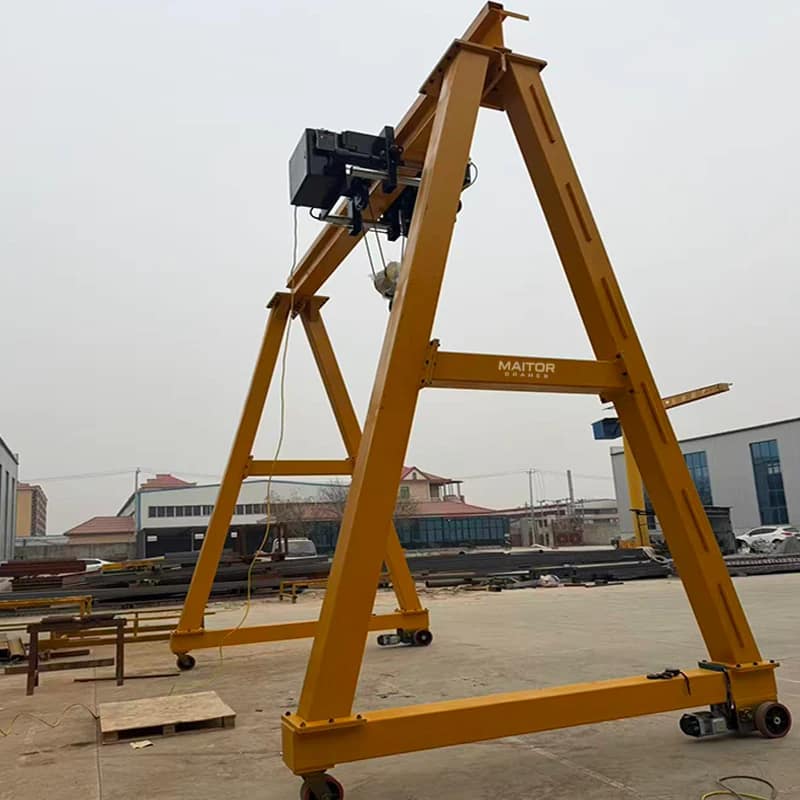
The true functionality of a gantry is realized when paired with a lifting mechanism. The combination of a gantry crane and hoist creates a complete material handling system. The hoist provides the vertical lift, while the gantry provides the mobility and structure. Their integration requires careful consideration of control systems, power requirements, and safety mechanisms.
Hoist Types and Compatibility
When configuring a gantry crane and hoist, the type of hoist must match the application.
- Electric Chain Hoists: Ideal for frequent, general-purpose lifting. They require variable frequency drives (VFDs) that offer a large low-frequency starting torque and a sufficiently large low-frequency output voltage to handle the load .
- Manual Hoists: Suitable for infrequent use or where power is not available.
- Air-Powered Hoists: Often used in environments where spark prevention is critical.
The interface between the gantry and the hoist usually involves a trolley. The trolley travels along the beam of the gantry, allowing the gantry crane and hoist to position loads horizontally along the span.
Control Systems and Smooth Operation
The integration of a gantry crane and hoist demands sophisticated control to ensure safety. For the hoist, vertical lifting and lowering requires the inverter to have a large starting torque to prevent hook wandering when starting and stopping .
For the gantry movement, simultaneous control is required. If the gantry moves north to south while the hoist is lifting, the acceleration must be regulated. If acceleration is too rapid, the weight may swing in the air .
Inspection and Maintenance Requirements
Safety standards, such as CSA B167, specify minimum requirements for the design, inspection, testing, and maintenance of cranes and hoists . These requirements apply to both permanently installed cranes and movable hoists .
A routine maintenance schedule for a gantry crane and hoist should include:
- Daily Inspection: Check hoist hooks for deformation, look for wear on the hoist chain or wire rope, and ensure limit switches are functional.
- Quarterly Inspection: Lubricate the trolley wheels and hoist mechanism. Inspect the brake system on the hoist.
- Annual Inspection: A thorough examination of the entire gantry crane and hoist structure, including load testing, should be performed by a qualified person. This includes checking for cracks in the gantry beam and verifying the integrity of all fasteners .
Structural Considerations
The gantry structure must be rated for the combined weight of the hoist and the maximum load. The beam must withstand the stresses of a moving gantry crane and hoist trolley. For heavy loads, the use of multiple lifting points rather than a single point can reduce load sway and unwanted movement .
Understanding the relationship between the gantry crane and hoist ensures that facilities can operate safely, efficiently, and in compliance with industry standards.
Need More Information On The Types Of Cranes? Contact MAITOR Today!
If you’re in need of an crane for your project but not sure which type or types of cranes will work best for your needs, we can help!
To learn more about our business and our equipment keep reading the helpful articles on our blog page.
To start a partnership with our team here at MAITOR, call us today toget a quote!